

Florida’s rivers, coastline, and wild lands draw millions of anglers and outdoor enthusiasts each year. But taking fish or wildlife outside of the rules set by the Florida Fish and Wildlife Conservation Commission (FWC) can carry consequences well beyond a warning, from small civil fines to third-degree felony charges. Understanding how fishing is licensed, how violations are classified, and who is responsible during a chartered trip can help you avoid an unwanted encounter with a wildlife officer.
Residents and visitors are held to the same standards. An experienced criminal attorney’s involvement is critical if you’re arrested for a serious wildlife infraction. Knowledge of Florida’s legal system is key to negotiating reduced charges and mounting an effective defense.
Fishing Licenses Are More Than a Piece of Paper
Florida law requires most people age 16 and over to hold a valid license before fishing in state waters, whether or not they keep what they catch. Florida residents over age 65 and anyone under age 16 are not required to have a license, although species-specific permits for snook, spiny lobster, and shark fishing from shore still apply.
How Florida Classifies and Punishes Violations
Fish and wildlife violations in Florida are sorted into four levels of severity:
- Level one, such as fishing without a license, is non-criminal, and generally handled with a citation and a fine.
- Level two are violations like taking small game or saltwater finfish, shellfish, or crustaceans.
- Level three violations usually involve commercial-scale quantities or prohibited gear and carry misdemeanor consequences.
- Level four are the most serious violations, up to third-degree felony charges. The violations include killing or possession of alligators, taking endangered species, or theft and willful destruction of commercial fishing or trapping gear. In addition to fines, a court may suspend or forfeit a person’s fishing or hunting license, seize equipment and vessels, and recover illegal catch.
Penalties are contingent upon the nature of the offense and prior history. A first offense carries a civil fine plus the cost of the license, with steeper fines for repeat violations within a three-year period. Exceeding a bag limit or keeping undersized fish can bring fines of hundreds of dollars per violation, and offenses involving specially protected species, such as tarpon or goliath grouper can bring penalties of $1,000 or more, with commercial-scale violations exposing a person to felony charges.
Responsibility for Fish Caught on Charter Excursions
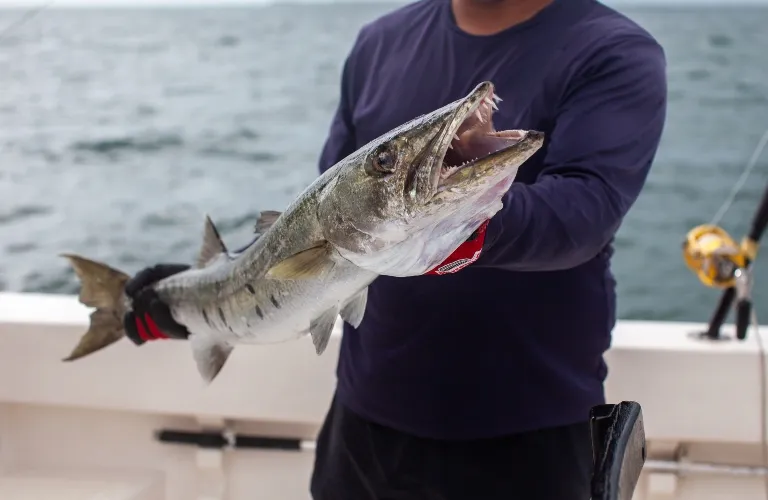
Chartered saltwater fishing trips require captains and vessel operators to hold a special license which functions as a blanket license for the paying passengers, who are not required to have individual licenses. Freshwater charters do not operate the same way, as freshwater guides cannot cover paying clients under their licenses, so clients must have their own license.
Being covered by a charter’s license does not mean there are no rules. The vessel license allows passengers to take a legal limit of fish only up to the number of people specified on that license, and it does not permit harvesting fish in commercial quantities or selling any part of the catch. If a boat exceeds its authorized passenger count or if the group’s combined catch exceeds the limit tied to the license, that is a violation regardless of who caught the fish. Captains and crew are likewise bound by the same limits as everyone else aboard when fishing under the vessel license, so the responsibilities for staying within bag and size limits during a charter trip is shared between the captain and fishing guests.
Protecting Resources, Protecting Fishermen
Fish and wildlife laws exist to protect resources that support the state’s ecosystems and tourism. Anyone cited for a violation has the right to appear in court and, if they choose, to be represented by an attorney like Brian M. Casey. It’s critical to have a legal representative who is familiar with FWC regulations and related laws. Call for a consultation today.